Chemicals Watch List

A Common Reference Framework for Chemical Transparency
The first sector-specific Chemical Watch List for textile, leather, apparel, and footwear manufacturing, developed through collaborative expert input and aligned with EU sustainability regulations.


Relationship between the
Chemical Watchlist and the ZDHC MRSL
The Chemical Watchlist is a voluntary, hazard-based reference that can inform how the
MRSL evolves over time. It adds no new requirements of its own.
Built today from established hazard- and policy-based sources to support CSRD & ESPR reporting


An expert-governed process. Substances move between stages only by ZDHC decision via the Submission Portal — never automatically.


Decisions are made by ZDHC and validated by the Technical Expert Group (TEGEWA, ETAD, AVISA, ChemSec). New evidence can move substances forward or back.


How the hazard sources relate to the Watchlist, MRSL & Archive
The Chemical Watchlist is the broad reference set. The MRSL Candidate List, MRSL and Archived Substances are progressively narrower stages within ZDHC's governance, informed by hazard categories such as SOC, Prop 65, PoP and SVHC.
- MRSL — formally restricted
- Candidate List — under evaluation
- Watchlist — full reference set of relevant substances of concern
- Archived — no longer relevant for restriction
Key principles
Enabling early readiness
The ZDHC Chemical Watchlist does not replace the MRSL or the MRSL Candidate List. Instead of waiting for formal submissions, regulatory bans, or public pressure, it transforms the MRSL Candidate List and Submission Portal into a decision stage rather than a discovery stage, supported by better data and shared understanding.
The ZDHC Chemical Watchlist allows ZDHC to:
- capture substances of concern earlier
- enable voluntary transparency by stakeholders
- collect implementation insight
- prepare the ecosystem for possible future transitions.


Intended use and target audience


The Chemical Watch List supports multiple stakeholder groups in advancing sustainable chemical management:

Brands
Use the list to identify SoC present in their value chain, enabling transparent reporting, informed materiality assessments, responsible sourcing decisions, and enhanced product stewardship.

Suppliers
Use the list to identify SoCs in manufacturing processes, identify substances potentially subject to future restrictions and initiate risk assessment or substitution where relevant.

Chemical Formulators
Reference the list to understand which substances may require disclosure or reporting and align with sustainability expectations from brands and supply chain partners.

Solution providers and certifiers
Use the Watchlist as a harmonised reference for chemical disclosure, supported by SDS data.

Auditors and platforms
Use the watchlist as a harmonised reference for verifying chemical disclosures, supported by validated SDS data.

Policy makers and standard-setting bodies
Recognise the watchlist as a sector-specific contribution to harmonised chemical transparency and reporting.

ZDHC
Use the watchlist to inform the future development of the MRSL, ensuring it remains scientifically grounded, forward-looking, and aligned with both industry practice and regulatory developments.

Sustainability regulatory context
ZDHC recognises that credible, transparent chemical management is essential for achieving broader sustainability goals, such as:
- reducing pollution;
- promoting safer production practices;
- enabling informed decision-making throughout the value chain.
The Chemical Watch List supports these goals by serving as a common reference that fosters alignment across industry stakeholders.
Regulatory Response This sustainability commitment also responds to the increasing regulatory momentum seen in frameworks like the CSRD and the ESPR, development that acted as the catalyst for ZDHC to strengthen its role in promoting chemical transparency and harmonised reporting practices across the industry.
Regulatory Response
The CSRD and ESRS require companies to disclose impacts, risks, and opportunities across environmental, social, and governance dimensions. Out of the five ESRS environmental standards, two are particularly relevant to the ZDHC Sustainable Chemical Management Framework: E2 Pollution and E3 Water and Marine Resources
E1 — Climate Change
E2 — Pollution
E3 — Water and Marine Resources
E4 — Biodiversity and Ecosystems
E5 — Resource Use and Circular Economy
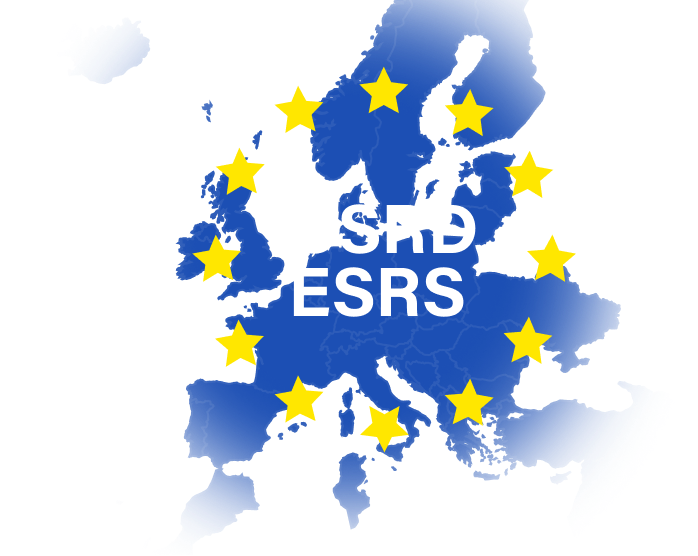

Pollution Disclosure (E2)
Under E2, companies must disclose the use and emissions of hazardous substances, including Substances of Concern (SoC) and Substances of Very High Concern (SVHC).
ESPR and Digital Product Passport
Parallel to this, the ESPR introduces product-specific requirements, including the mandatory use of a Digital Product Passport, which must include chemical composition data, including SoCs as defined in Article 2(27).

Current Industry Challenge
Despite these obligations, there is currently no sector-specific list of SoCs for textile, leather and footwear manufacturing. Companies are left to interpret regulatory definitions independently, leading to inconsistencies and inefficiencies.
Development process
A structured, multi-step methodology ensuring both regulatory alignment and sectoral relevance.Step 1
Source aggregation
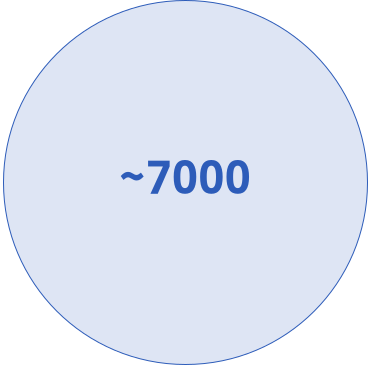
ZDHC compiled a Master List of approx. 7,000 unique substances that meet the ESPR Article 2(27) criteria (points 1–3), drawing from multiple hazard-based sources, including:
ZDHC MRSL REACH SVHC Annexes XIV/XVII Regulation (EU) 2019/1021 (POPs) ChemSec SIN List GOTS RSL bluesign BSBL Oeko-Tex
Step 2
Relevance screening
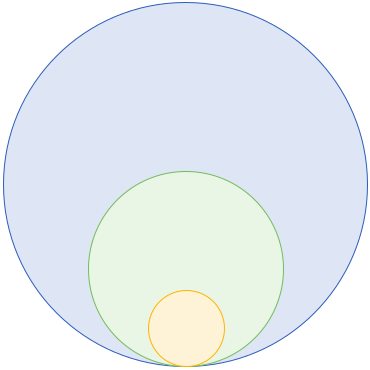
To determine sectoral relevance, a filtering process was applied:
7000
Almost 7,000 substances of concern were identified
5000
Approx. 5,000 substances used in the textile, apparel, footwear and leather industry were screened by the Technical Expert Group
1,673
A final list of 1,673 substances of concern was included in the ZDHC Chemical Watchlist V1.0 published in February 2026.
Step 3
Technical review and consensus

The SoC Technical Expert Group, comprising representatives from various networks and associations, contributed individual input and coordinated feedback, which was synthesized to assess the relevance and validate the sector-specific applicability of substances not already flagged by existing RSLs.
Step 4
Outcome

The result of this work is a provisional ZDHC Chemical Watch List containing 1,624 substances relevant to the textile, leather, apparel and footwear industry, aligned with the ESPR SoC definition.
Around 5,000 substances still require review. Initial feedback from the TEG has been received on many of these, though differences of opinion remain for a subset, and additional information or clarification is needed in some cases.
Step 5
Ongoing Governance
The ZDHC Chemical WatchList is a living document and will be maintained through ongoing expert collaboration and regular updates. The ZDHC Competence Centres will continue reviewing emerging scientific and regulatory developments, validate further substances of concern and address outstanding questions. Updates will be issued through a transparent, iterative process to ensure the ZDHC Chemical Watchlist remains credible, up-to-date and aligned with evolving regulatory expectations and stakeholder needs.

Download the ZDHC Chemical Watch List now ZDHC Chemical Watch List is a minimum viable reference product for stakeholders to use in their CSRD and ESPR preparations.
Chemical Watchlist Disclaimer:
The ZDHC Chemical Watchlist is a voluntary, expert-led reference tool designed to support brands, suppliers,
chemical formulators and other stakeholders across the textile and footwear value chain in identifying and
reporting substances of concern (SOCs) and substances of very high concern (SVHCs).
Developed
through a peer-reviewed, collaborative process led by ZDHC, this watchlist provides a credible foundation
for risk identification, informed decision-making, and sustainability reporting aligned with multiple
regulatory and voluntary frameworks, including CSRD/ESRS.
The Chemical Watchlist is not equivalent
to or replacing the ZDHC MRSL and does not introduce new compliance requirements, restrictions, or testing
mandates. This Chemical Watchlist serves as an informational instrument to enhance clarity, consistency, and
credibility in chemical management practices.